
Clean Fuels Policy Priorities
Champions of Progress
Our dedicated team of clean fuels experts champion progress at the state and federal levels. Clean Fuels Alliance America advocates on behalf of its members in regulatory and legislative issues to advance the growth of biodiesel, renewable diesel and sustainable aviation fuel in the United States.
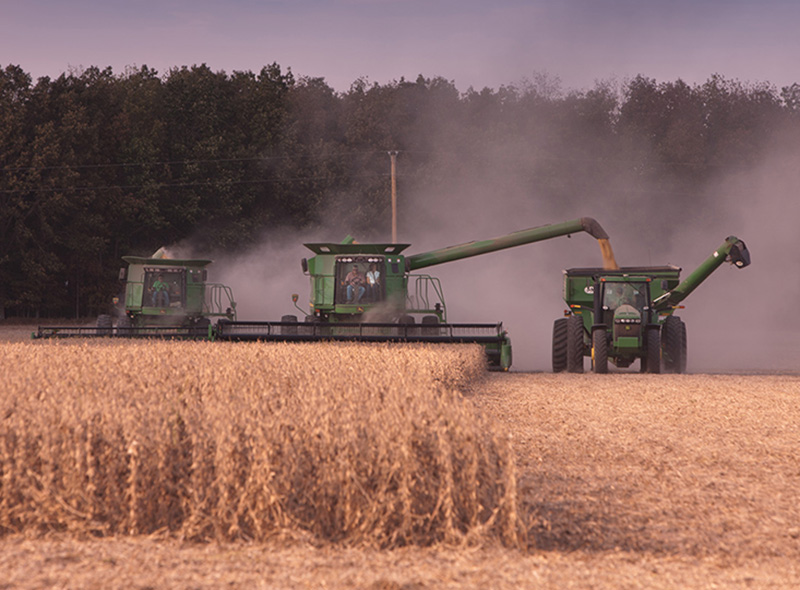
Requires transportation fuel sold in the United States to include annually set volumes of advanced clean fuels such as biomass-based diesel.
Federal tax credits adopted by Congress incentivize homegrown production and market access for biodiesel, renewable diesel and SAF.
Clean Fuels’ Fair-Trade Coalition supports fair trade in the biodiesel market, advocating for trade protections against unfairly subsidized and dumped biodiesel imports.

- Group Letter Urging Treasury Action on 45Z Tax Credit
Twenty-five trade associations representing producers, feedstock providers, blenders, consumers, and retailers of low-carbon, renewable fuels sent a letter to Treasury Secretary Janet Yellen, urging Treasury to finalize and publish guidance for the §45 Clean Fuels Production Credit as soon as possible.
- Co-Processing
Clean Fuels advocates policies to increase biodiesel, renewable diesel, and sustainable aviation fuel (SAF) production and the associated jobs, economic opportunities, agricultural markets, and environmental benefits. Co-processed fuel does not generate the same benefits and should not qualify for policy incentives.
- Letter to EPA on 2026 RFS Volumes from Nine Trade Associations
Each of our industries are committed to reducing greenhouse gas emissions, and we recognize that sustainable biofuels offer some of the most substantial immediate benefits to deliver carbon reductions. The EPA should utilize the RFS to improve energy security, bolster domestic industry and manufacturing, and maintain America’s leadership in developing and using sustainable, clean transportation technologies. While our industries will continue to make investments in producing, distributing, and using low-carbon fuels, EPA can and should send a strong signal to the market through robust RVOs.
- Group Letter Urging Use of GREET Model for SAF Tax Incentive
Clean Fuels, ASA, NOPA and U.S. Canola urge using the most recent version of the GREET model as the “similar methodology” option for determining SAF tax credit eligibility.
- Clean Fuels Comments on Treasury Guidance for Sustainable Aviation Fuel Credit
SAF derived from co-processing is ineligible for the tax incentive. Treasury should adopt GREET as the similar methodology.
- Letter from Iowa, Missouri and Nebraska Governors to EPA Administrator Regan on RFS Biomass-based Diesel Volumes for 2023-2025
The Proposed Renewable Fuel Standard Rules for 2023, 2024 and 2025 did not provide the expected upward trajectory for the biomass-based diesel industry.
- Letter from 12 Senators to Treasury Secretary Yellen Urging Use of GREET in SAF Tax Incentives
Treasury should adopt the U.S. Department of Energy’s Greenhouse Gases, Regulated Emissions, and Energy Use in Technologies
(GREET) model as the secondary methodology for calculating tax credits for sustainable aviation fuel (SAF) produced - Letter to President Joe Biden from 75 Stakeholders on the RFS Biomass-based Diesel Volumes for 2023-2025
Increased production of biodiesel and renewable diesel in 2023 illustrates the need for EPA to raise RFS volumes substantially.
- Clean Fuels Comments on Treasury Notice for Clean Hydrogen and Clean Fuel Credits
Treasury should use GREET -- a U.S. lifecycle carbon emissions accounting model -- to determine tax credits for U.S. produced fuels.
- Clean Fuels Comments on EPA Proposed Greenhouse Gas Emissions Standards for Heavy-Duty Vehicles-Phase 3
EPA cannot discount the immediate benefits biodiesel and renewable diesel have as we decarbonize the heavy-duty sector.
July 25, 2024
Clean Fuels Applauds Bipartisan, Bicameral Letter Urging Timely Rules on Production Tax Incentive
July 24, 2024
Clean Fuels Notifies EPA of Intent to Sue Over 2026 RFS Rule Delay
July 17, 2024
Clean Fuels Thanks Representatives for Letter Urging Higher RFS Volumes
July 11, 2024
Clean Fuels Welcomes USDA Request for Information on Climate Smart Ag
June 26, 2024
Clean Fuels Petitions EPA to Reconsider 2024 and 2025 RFS Volumes
June 25, 2024
Clean Fuels Applauds Senate Letter Urging Higher RFS Volumes
June 12, 2024
Groups Urge Treasury to Promptly Complete §45Z Clean Fuels Production Credit Guidance
May 15, 2024
Clean Fuels Welcomes §40B SAF GREET Model
May 1, 2024
Nine Trade Associations Ask EPA to Meet November Deadline for 2026 RFS Volumes
April 29, 2024